How We Can Help You
A free, strengths-based program tailored to your service. Choose what works for your team and your clients.

Vaping Education for Your Clients
On-site sessions by trained Cancer Council ACT staff, tailored to your clients to encourage help-seeking, support quit attempts, and complement treatment goals.
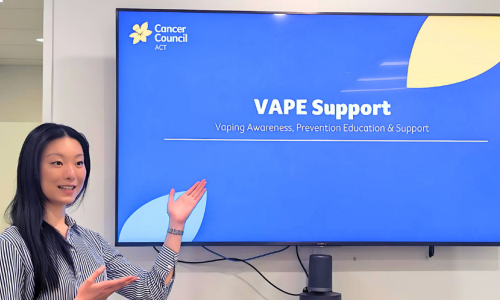
Intervention Training for Staff
Brief Intervention Training that builds your team's confidence to talk safely about smoking and vaping, recognise nicotine dependence, and refer clients on.

Organisational & Policy Support
Support to embed quit conversations as routine care, working with your leadership to strengthen smoking and vaping policies across the service.

VAPE Support Resources
Free guides, fact sheets, referral pathways, and client-facing materials to support your team between training sessions and help clients access further help.
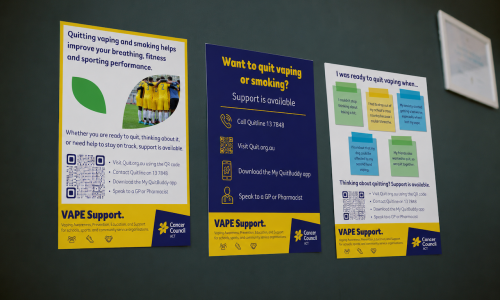
Posters & Signage
Posters and signage to reinforce a smoke-free and vape-free message across your service environment, waiting areas, and common spaces.
Supporting Community Services Across the ACT
Community service staff have strong therapeutic relationships with people across the ACT who are affected by nicotine. They are best placed to provide personalised and effective quit support when the time is right.
The VAPE Support program takes a strengths-based approach. We recognise that people navigating complex challenges already have the capacity to make positive changes, including reducing or quitting smoking, vaping, or nicotine use. The program is free for all ACT community service organisations.
Mental Health - People experiencing moderate to high levels of psychological distress are at least 3 times more likely to be currently using vapes. Nicotine dependence is one of the ways that vaping and tobacco worsen mental health.
Alcohol & Other Drugs - People with a history of dependence on alcohol or other drugs are more likely to be using vapes or to be dependent on nicotine. Making a quit attempt from smoking or vaping increases the likelihood of quitting another drug of dependence.
Youth Services - Young people experience more physical and mental harm from vaping and nicotine use, and quitting may be harder. Training and education tailored for youth services is a high priority.
Priority Populations - Aboriginal and Torres Strait Islander peoples, pregnant women and families, people in contact with the justice system, and people who identify as LGBTIQ+ generally experience more harm from vaping and smoking. Our team can help you support your clients to quit.
Frequently Asked Questions
The VAPE Support - Community Services program is a free training and education service from Cancer Council ACT designed for community service organisations across Canberra. It helps frontline staff support clients who want to reduce or quit smoking and vaping. The program includes education sessions for clients, brief intervention training for staff, policy support to embed quit conversations into routine care, and free resources. It is fully funded by ACT Health and delivered at no cost to your organisation.
Yes. The VAPE Support program for community service organisations is completely free. It is funded by an ACT Government Healthy Canberra Grant through the Department of Health and delivered by Cancer Council ACT. There are no fees for staff training, client education sessions, policy support, or resources.
People experiencing moderate to high levels of psychological distress are at least three times more likely to be using vapes. Nicotine dependence can undermine treatment outcomes for mental health conditions and complicate recovery from alcohol and other drug dependence. Research shows that making a quit attempt from smoking or vaping increases the likelihood of quitting other substances. Community service staff already have trusted therapeutic relationships with clients, making them well placed to provide effective quit support when it is appropriate.
Brief Intervention Training teaches community service staff how to have short, non-judgemental conversations with clients about smoking and vaping. The training covers how to recognise nicotine dependence, how to raise the topic within existing care models, and how to connect clients with professional support such as Quitline (13 7848) or their GP. Sessions run for 60 to 90 minutes and are delivered on-site at your service by trained Cancer Council ACT staff. The approach is strengths-based, recognising that clients navigating complex challenges already have the capacity to make positive changes.
Any community service organisation in the ACT that works with people who may be affected by nicotine dependence. This includes mental health services, alcohol and other drug services, youth services, homelessness and housing support, Aboriginal and Torres Strait Islander health services, services supporting people in contact with the justice system, LGBTIQ+ support services, family and relationship services, and disability support organisations.
Yes. The program is specifically designed to complement, not replace, your existing care model. Brief intervention techniques are short conversations that fit naturally within the support your staff already provide. Whether your service uses a recovery-oriented framework, trauma-informed care, or another therapeutic model, the quit support training adapts to work within it. The goal is for nicotine conversations to become a routine part of holistic care.
Contact Cancer Council ACT through the booking form on the VAPE Support website or email vapesupport@actcancer.org. A team member will discuss your service, your client base, and what training format works best. Sessions can be delivered in a single 60 to 90 minute block or split across multiple shorter sessions to accommodate staff availability.
Bring VAPE Support to your service
If you are a team leader, service manager, or frontline worker who wants to strengthen the quit support your service provides, we can help. The program is free, strengths-based, and designed to work within your existing care model.
Get in touch to start a conversation about what would work best for your team and your clients.